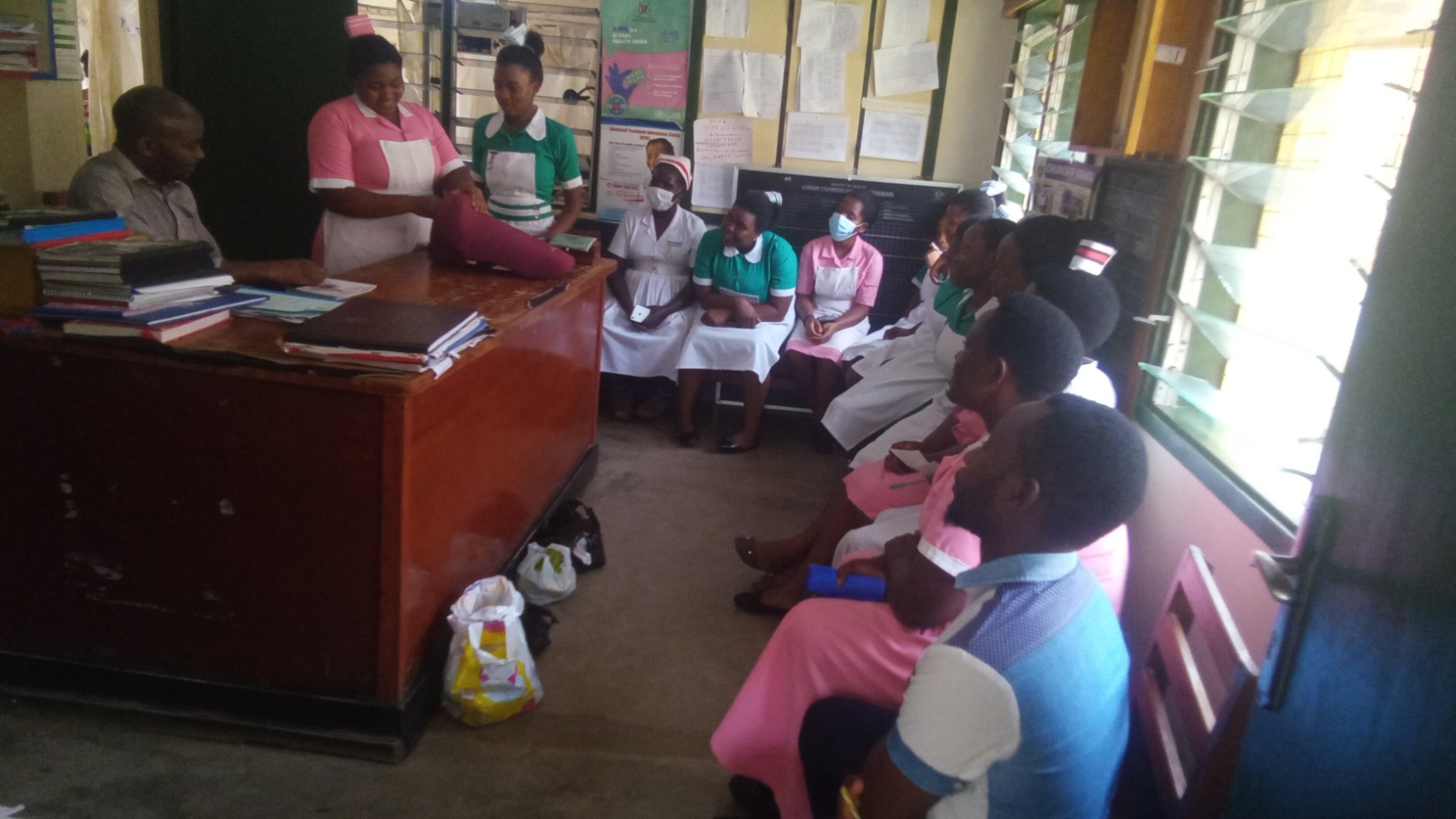
Introduction of New and Lesser Used Medicines in Tooro region for the Prevention and Treatment of Postpartum Hemorrhage, September 2023-May 2024.
Author: Jostas Mwebembezi (Statistician, Founder & Executive Director), Rwenzori Center for Research and Advocacy (RCRA) +256(0)740-023-161 jsmwebembezi@rcra-uganda.org
Background: In 2018, WHO recommended the use of Heat-stable Carbetocin (HSC) and tranexamic acid (TXA) for Postpartum Hemorrhage (PPH) prevention and management, respectively. In Uganda, Postpartum Hemorrhage (PPH) is contributes 34% of the maternal deaths. Despite the high PPH prevalence in Uganda, the use of these commodities is very minimal. We introduced and rolled out HSC and TXA in the Tooro region to increase access to life-saving medicines for PPH and to reduce maternal morbidity and mortality rates.
Methods: With catalytic opportunity fund (COF) funding from Reproductive Health Supplies Coalition (RHSC), Rwenzori Center for Research and Advocacy implemented a nine-month project in 9 districts and one city of Tooro region, Uganda, namely, Bundibugyo, Bunyangabu, Fort Portal City, Kabarole, Kamwenge, Kasese, Kitagwenda, Kyegegwa, Kyenjojo, and Ntoroko, with activities implemented at regional, district, and facility levels. The interventions included a regional inception meeting with relevant stakeholders and training regional trainers to reorient participants to the basics of PPH, HSC, and TXA. Conducted facility-based mentorship on supply chain strengthening, PPH, HSC, and TXA, and conducted joint supportive supervision.
Results: The inception meeting was attended by 52 stakeholders from districts and the Ministry of Health. The stakeholders were taken through their respective roles in the project, and they pledged their commitment to support the project. Conducted a 5-day training of 50 regional masters with 5 participants from each district. Conducted a 2-day facility-based mentorship at each of the 136 health facilities, and mentored 1,370 health workers. Conducted targeted supportive supervision covering 20 health facilities. 684,300 women received PPH prevention and care services, and 3,780 women received HSC or HSC and TXA for PPH prevention and treatment.
Conclusion: The project was successfully implemented, with the success attributed to the great engagement and involvement of relevant stakeholders at all levels. The 20 facilities that participated in the mentorship reported no maternal complications related to PPH. We recommend the nationwide scale-up of HSC and TXA implementation and continued training for healthcare providers.
Rwenzori Center for Research and Research limited is a 501(C)(3) status nonprofit organization. All donations are tax-deductible to the extent allowed by law.